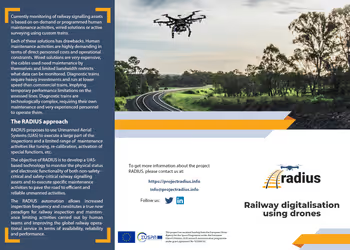
RADIUS brochure
This is the trifoil brochure for ICARUS.
Publication date: September 2019
Archive type: PDF Document
Archive size: 10.4 Mb


Currently monitoring of railway signalling assets is based on three main alternative methods: a) human maintenance activities; b) wired solutions; c) surveying using monitoring trains. All these methods impose severe limitations in terms of safety issues (i.e., presence of humans on the track), initial investment required and complexity (especially in the case of diagnostic trains), operating costs, limited set of the diagnostic data processed (especially in the case of wired solutions) and track occupation (in the case of human activities and diagnostic trains). The direct result of these limitations is that the maintenance activities of railway lines are suboptimal, resulting in preventable failures that require expensive and disruptive reparations that usually imply the temporal interruption of the service in the affected tracks.
RADIUS proposes to use Unmanned Aircraft Systems (UAS) or drones to execute a large part of the inspection and maintenance tasks of signalling assets that improves on the current methods but requires compliance with aviation standards and norms in addition to those already existing in the railway environment.
This project has received funding from the European Union Agency for the Space Programme under the European Union’s Horizon 2020 research and innovation programme under grant agreement No 101004192.
Closed
EuroUSC España is responsible for the communication and dissemination activities and will also participate .






The following documents summarizing the results obtained in the Project are available for public download:
This is the trifoil brochure for ICARUS.
Publication date: September 2019
Archive type: PDF Document
Archive size: 10.4 Mb
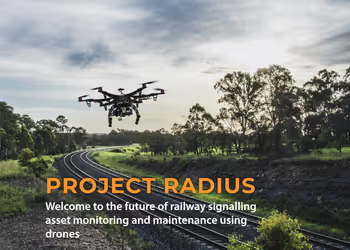
This white paper presents the objectives, results and conclusions of the project and it is intended for anyone interested in the applications of the Radius technologies in the railway domain.
Publication date: September 2019
Archive type: PDF Document
Archive size: 13.2 Mb